
 (0)
(0)Gatlinburg sits at the doorstep of the Great Smoky Mountains National Park, putting 800+ miles of trails within easy reach. These 10 hikes are the closest to downtown, ranging from flat riverside walks to lung-burning climbs with panoramic payoffs.
Most trailheads are 5-25 minutes from your cabin. We’ll also give you 2 must-see bonus destinations further away from Gatlinburg. And for a broader look at trails throughout the national park, see our guide to Smoky Mountain trails.
Quick Picks by Category
Best waterfall hike: Rainbow Falls or Grotto Falls (if you want to walk behind it!)
Easiest waterfall trip: Cataract Falls (1.1 miles: done in 30 min)
Best panoramic views: Chimney Tops or Alum Cave Bluffs
Dog friendly: Gatlinburg Trail (off-leash alternative: your gated cabin deck)
Few crowds: Baskins Creek Falls or Porters Creek
Best for young kids: Sugarlands Valley Nature Trail or Gatlinburg Trail
Best wildflowers (spring): Porters Creek Trail
Challenging workout: Chimney Tops (1,400-foot gain in under 2 miles)
Table of Contents
- Gatlinburg Trail
- Sugarlands Valley Nature Trail
- Cataract Falls Trail
- Laurel Falls Trail (closed until summer 2026)
- Grotto Falls Trail
- Rainbow Falls Trail
- Baskins Creek Falls Trail
- Alum Cave Trail
- Chimney Tops Trail
- Porters Creek Trail
- Beyond Gatlinburg: 2 Must-See Destinations
- Tips for Hiking Near Gatlinburg
- Frequently Asked Hiking Questions
- Cabin Home Base
1. Gatlinburg Trail
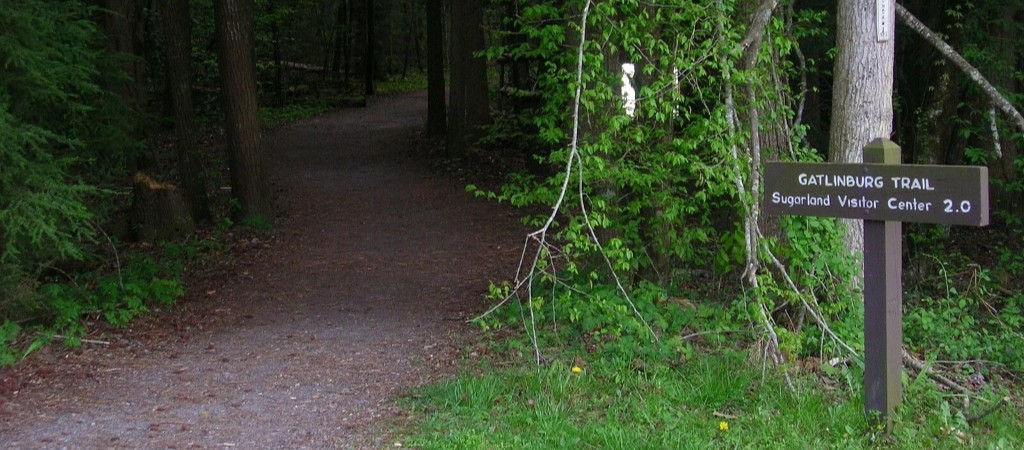
Gatlinburg Trail Trailhead, Great Smoky Mountains — photo by Scott Basford (Blinutne), via Wikimedia Commons
Distance: 3.8 miles round-trip
Elevation Gain: 235 feet
Difficulty: Easy
Drive from Downtown: 0-5 minutes
Allow: 1.5-2 hours
Why Visit: Dogs allowed; biking allowed; riverside walk; kid friendly; historic sites
The only trail in the park where you can bring your dog and your bike, this flat, shaded path follows the West Prong of the Little Pigeon River from downtown Gatlinburg to Sugarlands Visitor Center. You'll pass old stone walls, homestead remnants, and a couple of spots where kids love to splash in the creek.
Start from River Road near the edge of downtown or from Sugarlands Visitor Center and walk back toward town. Either direction works. This is a great warm-up hike or a low-key afternoon stroll when you want fresh air without a major workout.
For more cycling options, check out our list of bike trails in the Smokies!
2. Sugarlands Valley Nature Trail

Sugarlands Visitor Center, Great Smoky Mountains — photo by Cabins for YOU Marketing Team
Distance: 0.5-mile loop
Elevation Gain: 95 feet
Difficulty: Easy
Drive from Downtown: 5-10 minutes
Allow: 20-30 minutes
Why Visit: Paved; wheelchair accessible; stroller friendly; quick stop
A fully paved loop right next to Sugarlands Visitor Center, this trail winds through forest with interpretive signs about Smoky Mountain ecology. It's flat enough for wheelchairs and strollers, making it one of the most accessible trails in the park.
It’s perfect if you're traveling with grandparents, toddlers, or anyone who wants a quick taste of the national park without committing to a longer hike. Pair it with a stop at the visitor center to see the exhibits and grab a map.
For more family options, check out our list of stroller-friendly trails in the Smokies!
3. Cataract Falls Trail
Distance: 1.1 miles round-trip
Elevation Gain: 150 feet
Difficulty: Easy
Drive from Downtown: 5-10 minutes
Allow: 30-45 minutes
Why Visit: Shortest waterfall hike; kid friendly
As the quickest waterfall hike in Gatlinburg, this short trail leads to a modest but pretty cascade that's especially impressive after rain. It's not the tallest of waterfalls in the Smokies, but the easy access makes it ideal for families with young kids or anyone short on time.
The trailhead is near Sugarlands Visitor Center at the start of Fighting Creek Nature Trail, where you’ll take a right at the junction just past the bridge. Later, you’ll cross Sugarlands Residence Road to Cove Mountain Trail to complete the journey. Combined round-trip hiking and driving time is under an hour, leaving plenty of day left for other activities.
For more easy-to-navigate options, check out our list of beginner-friendly trails in the Smokies!
4. Laurel Falls Trail
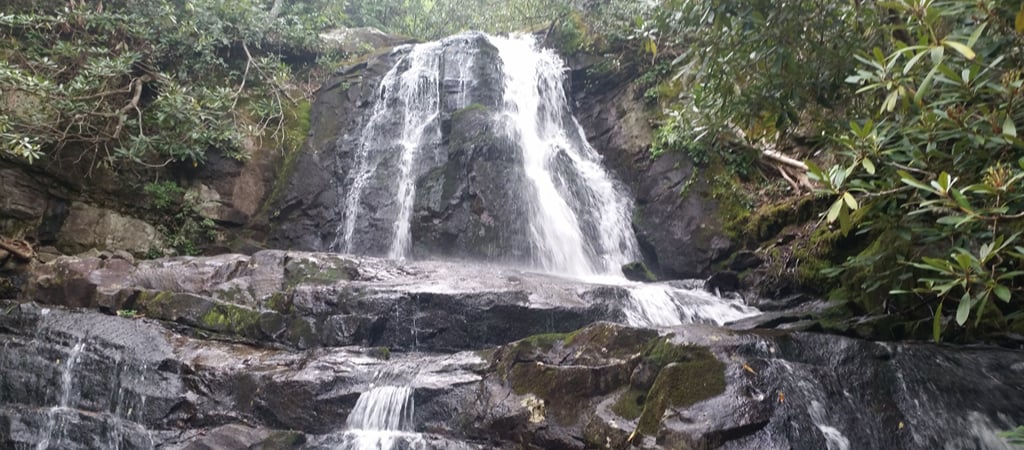
Laurel Falls, Great Smoky Mountains — photo by Cabins for YOU Marketing Team
TRAIL CLOSED: Laurel Falls Trail is closed from January 6, 2025, through summer 2026 for major rehabilitation. The park is adding viewing platforms, repaving the trail, and expanding parking. Check NPS current conditions for reopening updates.
Distance: 2.6 miles round-trip
Elevation Gain: 314 feet
Difficulty: Easy to moderate
Drive from Downtown: 10-20 minutes
Allow: 1-1.5 hours
Why Visit: 80-foot waterfall; paved trail; popular
When it reopens, Laurel Falls will once again be one of the park's most popular hikes. The paved 1.3-mile path climbs steadily through the forest to an 80-foot waterfall split by a footbridge. You can stand right next to the falls and feel the mist.
The trail draws over 300,000 hikers annually, which is exactly why it needed renovation. When it reopens, arrive early on weekends to beat the crowds.
5. Grotto Falls Trail
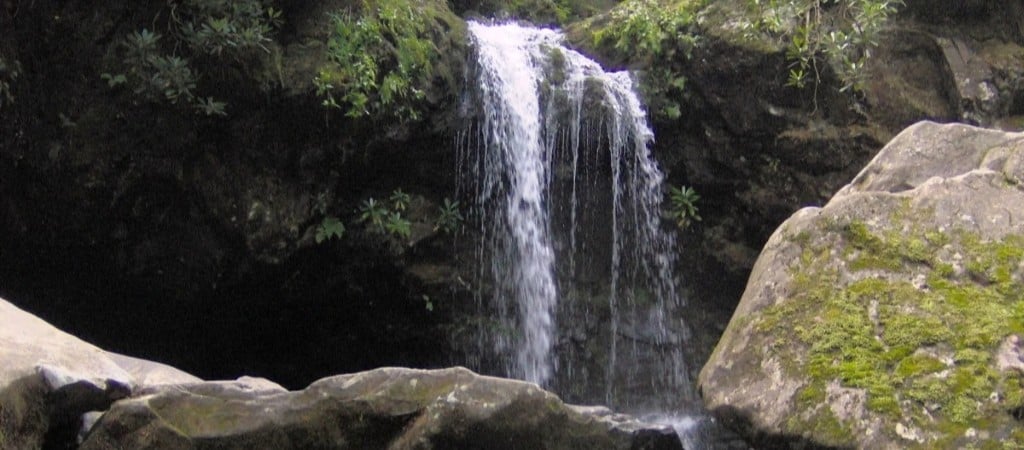
Grotto Falls, Great Smoky Mountains — photo by Brian Stansberry, via Wikimedia Commons
Distance: 2.6 miles round-trip
Elevation Gain: 585 feet
Difficulty: Moderate
Drive from Downtown: 25-30 minutes
Allow: 1.5-2 hours
Why Visit: Walk-behind waterfall; old-growth hemlock forest
The only waterfall in the Smokies you can walk behind, Grotto Falls drops 25 feet into a small grotto, and the trail passes directly behind the curtain of water. Bring a rain jacket if you want to get close without getting soaked.
The hike climbs through one of the park's remaining old-growth hemlock forests along Trillium Gap Trail. Watch for the llama trains that supply LeConte Lodge; they use this trail to haul supplies up the mountain.
Seasonal Access: The trailhead is on Roaring Fork Motor Nature Trail, which typically closes early December through late March. Check the road status before visiting in winter.
6. Rainbow Falls Trail
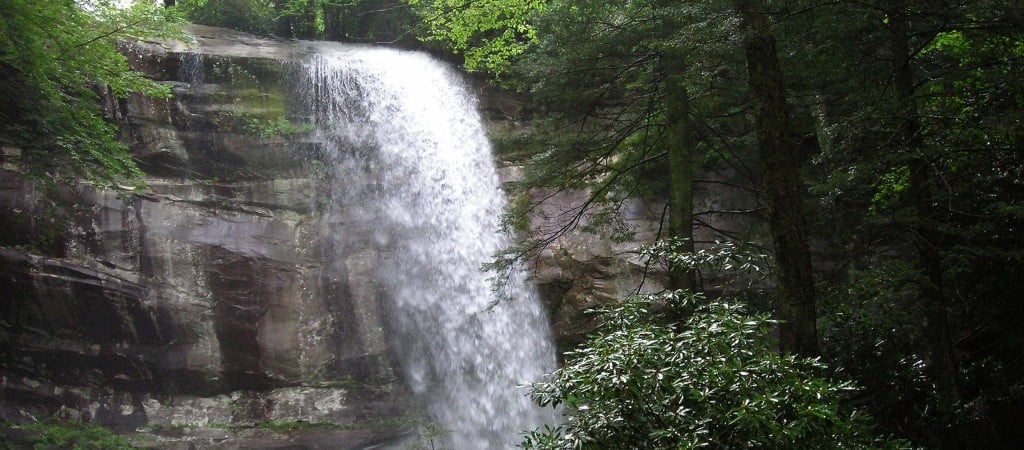
Rainbow Falls, Great Smoky Mountains — photo by Scott Basford (Blinutne), via Wikimedia Commons
Distance: 5.4 miles round-trip
Elevation Gain: 1,500 feet
Difficulty: Moderate to strenuous
Drive from Downtown: 10-15 minutes
Allow: 3-4 hours
Why Visit: 80-foot waterfall; rainbow in afternoon mist; challenging climb
Rainbow Falls is the tallest single-drop waterfall accessible by trail near Gatlinburg. On sunny afternoons, the mist creates rainbows at the base. The trail gains 1,500 feet over 2.7 miles, so expect a workout on the way up and burning quads on the way down.
The trailhead is on Cherokee Orchard Road, which stays open year-round (unlike the nearby Roaring Fork Motor Nature Trail). There are 3 parking lots near the trailhead: Bullhead Parking A is the closest. Parking fills fast on weekends, so aim to arrive by 8 AM during peak season.
7. Baskins Creek Falls Trail
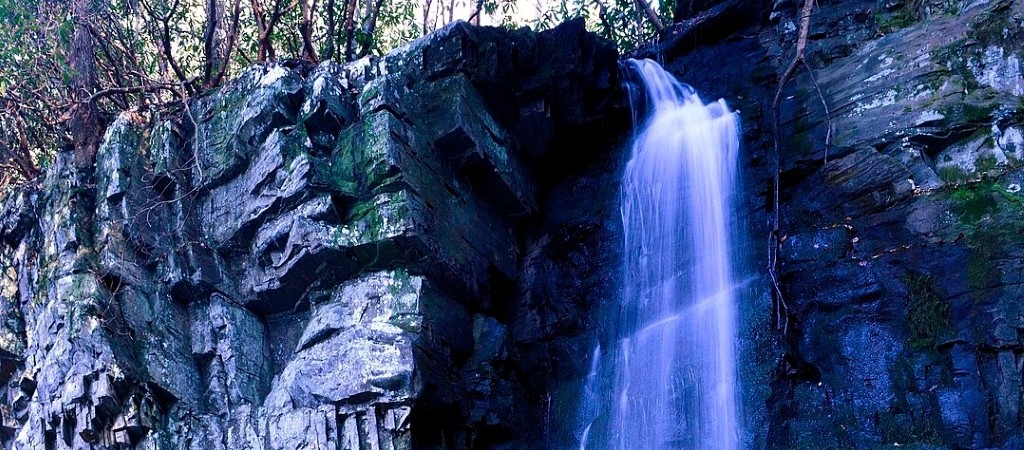
Baskins Creek Falls, Great Smoky Mountains — photo by ZachN 0421, via Wikimedia Commons
Distance: 3 miles round-trip
Elevation Gain: 953 feet
Difficulty: Moderate
Drive from Downtown: 15-20 minutes
Allow: 1.5-2.5 hours
Why Visit: Less crowded; waterfall; secluded
One of the least-visited waterfall hikes near Gatlinburg, Baskins Creek Falls drops about 40 feet into a rocky pool, and you'll likely have it to yourself, even on busy weekends. The trail descends on the way in, which means you'll be climbing on the return.
The trailhead is just off Roaring Fork Motor Nature Trail, near the beginning of the one-way loop. This is a great alternative when other trails are packed.
Seasonal Access: The trailhead typically closes in early December through late March. In winter, you can still access the trail by parking at the Rainbow Falls trailhead and hiking in via the road.
8. Alum Cave Trail
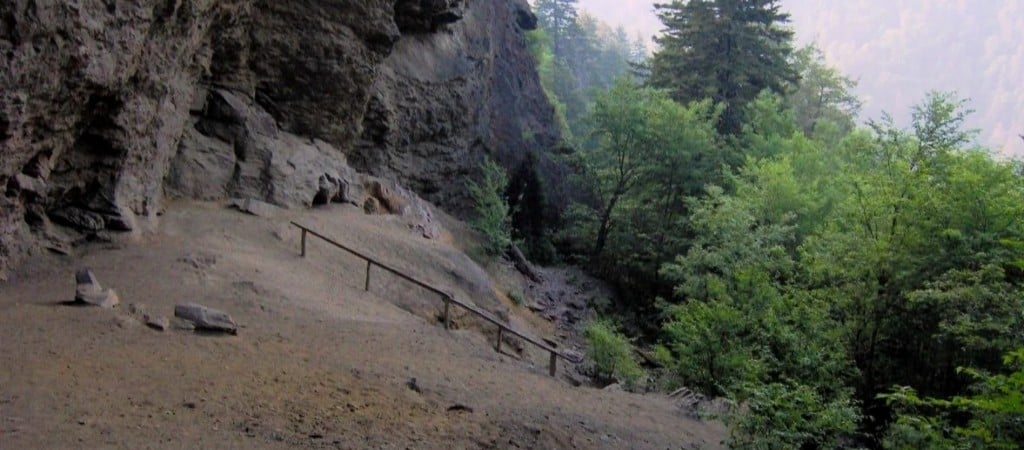
Alum Cave Bluffs, Great Smoky Mountains — photo by Brian Stansberry, via Wikimedia Commons
Distance: 4.4 miles round-trip
Elevation Gain: 1,125 feet
Difficulty: Moderate
Drive from Downtown: 20-25 minutes
Allow: 2.5-3.5 hours
Why Visit: Arch Rock; Alum Cave Bluffs; iconic Smokies hike
One of the most scenic trails in the entire park, you'll pass through Arch Rock (a natural tunnel), cross log footbridges over mountain streams, and reach Alum Cave Bluffs — a massive overhanging rock formation that shelters hikers from rain.
Most people turn around at the bluffs, but the trail continues another 3 miles to the summit of Mt. LeConte if you want a full-day adventure. The first section to Arch Rock is moderate; the climb to Alum Cave Bluffs gets steeper.
9. Chimney Tops Trail
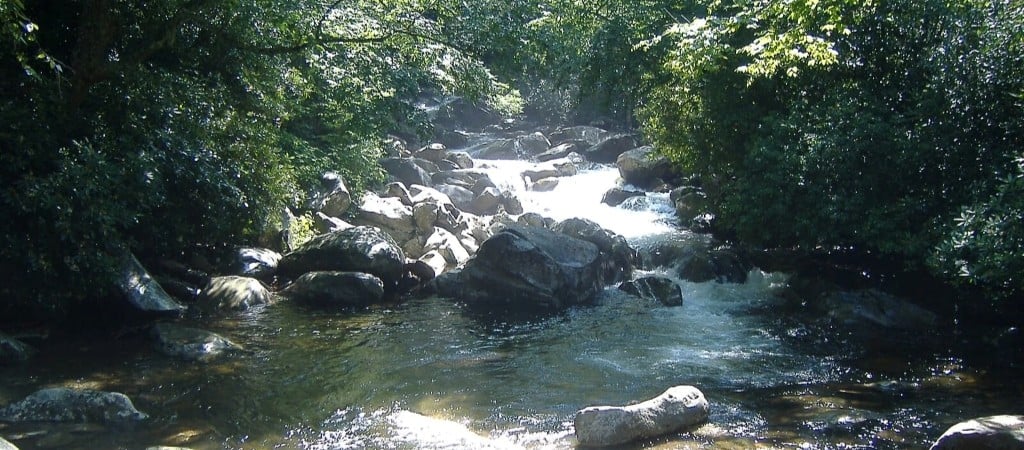
River Along Chimney Tops Trail, Great Smoky Mountains — photo by Peter K., via Wikimedia Commons
Distance: 3.8 miles round-trip
Elevation Gain: 1,400 feet
Difficulty: Strenuous
Drive from Downtown: 15-25 minutes
Allow: 2.5-3.5 hours
Why Visit: Panoramic views; challenging climb; iconic summit
A steep, relentless climb that rewards you with some of the best views in the Smokies, the trail gains 1,400 feet in under 2 miles, including sections with stone steps and exposed roots. At the top, an observation deck overlooks Mt. LeConte and the surrounding ridges.
This trail attracts serious hikers. If you want a challenge close to Gatlinburg, this is it.
Summit Closed: The final 0.25 miles to the rocky pinnacles have been closed since the 2016 wildfire. The observation deck provides excellent views, but climbing past the gate is prohibited and dangerous.
10. Porters Creek Trail
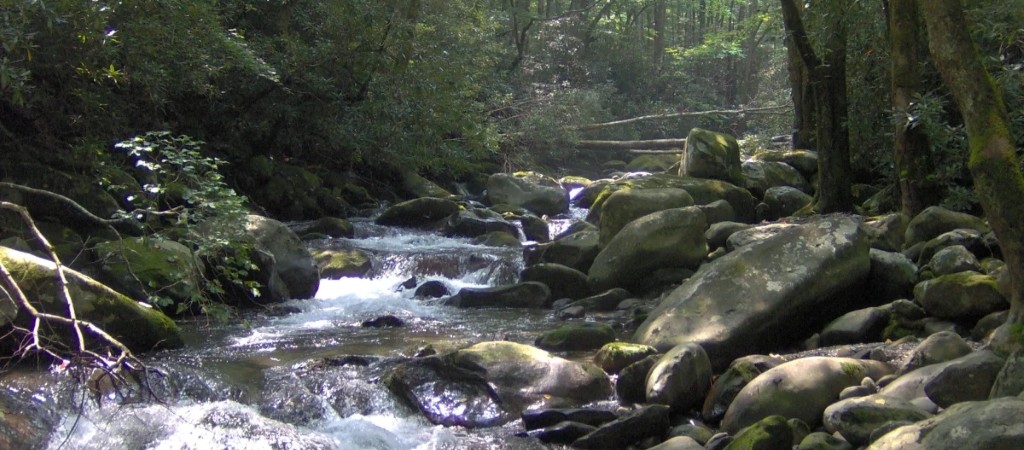
Porters Creek, Greenbrier, Great Smoky Mountains — photo by Brian Stansberry, via Wikimedia Commons
Distance: 7.2 miles round-trip
Elevation Gain: 1,561 feet
Difficulty: Easy to moderate
Drive from Downtown: 30-35 minutes
Allow: 4-4.5 hours
Why Visit: Wildflowers (spring); less crowded; historic homestead; waterfall
The best wildflower hike near Gatlinburg, this path’s forest floor explodes with trillium, phacelia, violets, and dozens of other species from mid-March through May. The trail follows an old road through the Greenbrier area, passing a historic homestead and cemetery before reaching Fern Branch Falls. For a guided experience, consider signing up for the annual Spring Wildflower Pilgrimage!
Even outside wildflower season, this trail sees fewer crowds than most. The gentle grade makes it accessible for most fitness levels, and the forest feels more remote than trails closer to downtown.
Beyond Gatlinburg: 2 Must-See Destinations
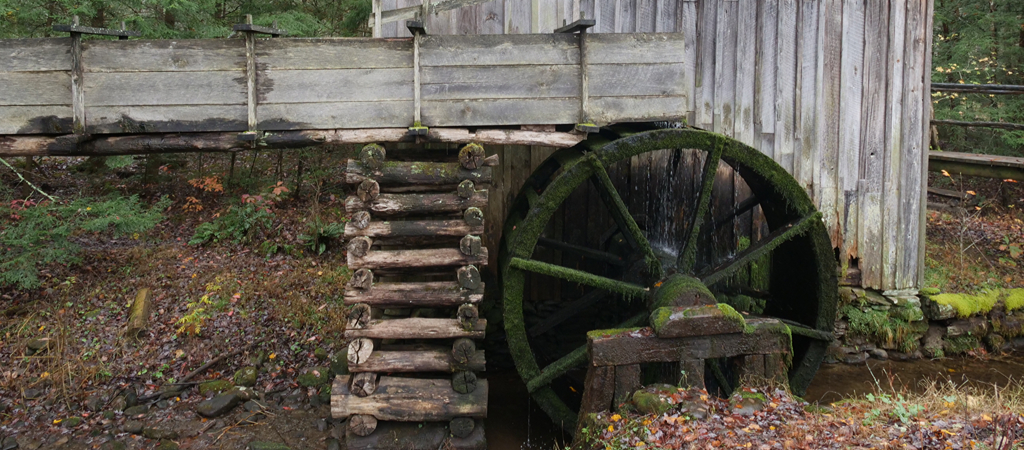
These aren't hiking trails in the traditional sense, but most visitors to the Smokies enjoy the experience. Plus, both places are easy drives from your cabin.
Cades Cove (45 Minutes from Gatlinburg)
An 11-mile, one-way loop road through a historic valley surrounded by mountains, you'll see wildlife (deer, turkey, black bears, coyotes), 19th-century homesteads, churches, and a working grist mill.
Several short trails branch off the loop, including Abrams Falls (5 miles round-trip to a powerful 20-foot waterfall). The loop takes 2-4 hours, depending on traffic and stops. Arrive before 9 AM or expect bumper-to-bumper traffic on weekends.Catch a glimpse of Cades Cove.
Newfound Gap (30 Minutes from Gatlinburg)
The highest point on the main road through the park is at 5,046 feet: Newfound Gap. You can stand on the Tennessee/North Carolina state line, take in panoramic mountain views, and access the Appalachian Trail without a major hike.
Bonus: Rockefeller Memorial marks where Franklin D. Roosevelt dedicated the park in 1940.
Tips for Hiking Near Gatlinburg

Parking: A parking tag is required anywhere in the national park. Tags cost $5/day, $15/week, or $40/year. Buy a tag online at nps.gov before you arrive, pick one up at the Sugarlands Visitor Center, or grab one at the Gatlinburg Welcome Center. Popular trailheads like Rainbow Falls and Alum Cave fill parking areas by 9 AM on summer and fall weekends.
Restrooms: Sugarlands Visitor Center has restrooms and water fountains. Most trailheads do not. Plan accordingly before you start hiking.
Cell Service: Expect little to no cell service on most trails. Download offline maps (Google Maps or AllTrails) before you leave your cabin. Let someone know your plans if you're hiking alone.
Trail Conditions: Weather and trail closures change frequently. Check the NPS current conditions page to review any alerts before heading out, especially after heavy rain or in winter.
Bear Safety: Black bears are active throughout the Smokies. Make noise on the trail, never approach or feed wildlife, and store food properly. If you see a bear, keep your distance (at least 50 yards) and do not run. See black bear safety tips here.
Best Times: Weekday mornings see the fewest crowds. Spring brings wildflowers and waterfalls at peak flow. Summer means lush green forests with bigger crowds. Fall foliage peaks around mid-October at Gatlinburg's elevation. Winter offers solitude, but some roads and trails may close.
What to Bring:
- Water (no fountains on trails)
- Sturdy shoes (long walks; rugged terrain)
- Layers (10-15 degree temperature drops at elevation)
- Snacks (fuel for longer hikes)
- Rain jacket (fast-changing weather in the mountains)
Always bring what you take inside the park with you — never leave items behind or steal a part of nature to take home.
Dog Owners: Only 2 trails in the entire park allow leashed dogs: Gatlinburg Trail and Oconaluftee River Trail (near Cherokee, NC). If you're staying in a pet-friendly cabin, Gatlinburg Trail is your best bet!
Frequently Asked Hiking Questions
What is the easiest hiking trail in Gatlinburg?
Sugarlands Valley Nature Trail is the easiest. It's a 0.5-mile paved loop that's wheelchair and stroller accessible. For a slightly longer easy hike, Gatlinburg Trail (3.8 miles round-trip) is flat and follows the river.
Are dogs allowed on Gatlinburg hiking trails?
Only on the Gatlinburg Trail. It's the only trail near Gatlinburg (and one of only 2 in the entire park) that allows pets. Dogs must be on a leash no longer than 6 feet.
Do I need a parking pass to hike in the Smoky Mountains?
Yes. A parking tag is required at all trailheads in Great Smoky Mountains National Park. Tags cost $5/day, $15/week, or $40/year. You can buy them online, at the Sugarlands Visitor Center, or at the Gatlinburg Welcome Center.
What is the best waterfall hiking trail near Gatlinburg?
Rainbow Falls is the most impressive, with an 80-foot drop and rainbows in the afternoon mist. For an easier option, Cataract Falls is only 1.1 miles round-trip. For something unique, Grotto Falls lets you walk behind the waterfall.
When is the best time to hike in Gatlinburg?
Spring (March – May) offers wildflowers and waterfalls at peak flow. Fall (mid-October – early November) brings stunning foliage. Summer is beautiful but crowded. Winter provides solitude, with some road closures. Weekday mornings are less crowded year-round.
Your Gatlinburg Hiking Home Base
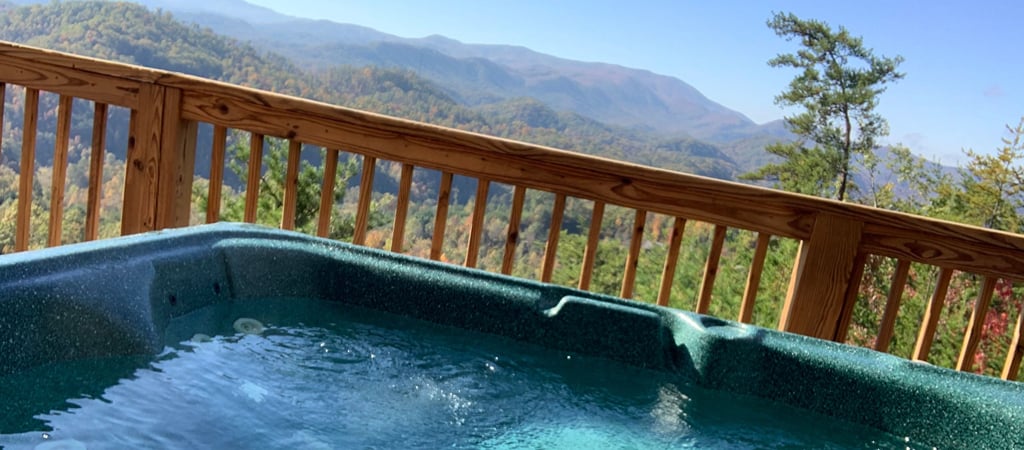
Most of our Gatlinburg cabins are 15-30 minutes from these trailheads. Wake up to mountain views, hit the trails, and come back to a hot tub on the deck. If you're bringing your dog, check out our pet-friendly cabins in Gatlinburg and plan a hike on the Gatlinburg Trail.
Additional amenities include indoor swimming pools, loaded game rooms, home theaters, crackling fireplaces, king suites, bunk rooms, and fast Wi-Fi. Browse our Gatlinburg cabin rentals to find the right fit for your hiking trip.